
Data Center Cooling and Water Efficiency Series
HVAC Blog
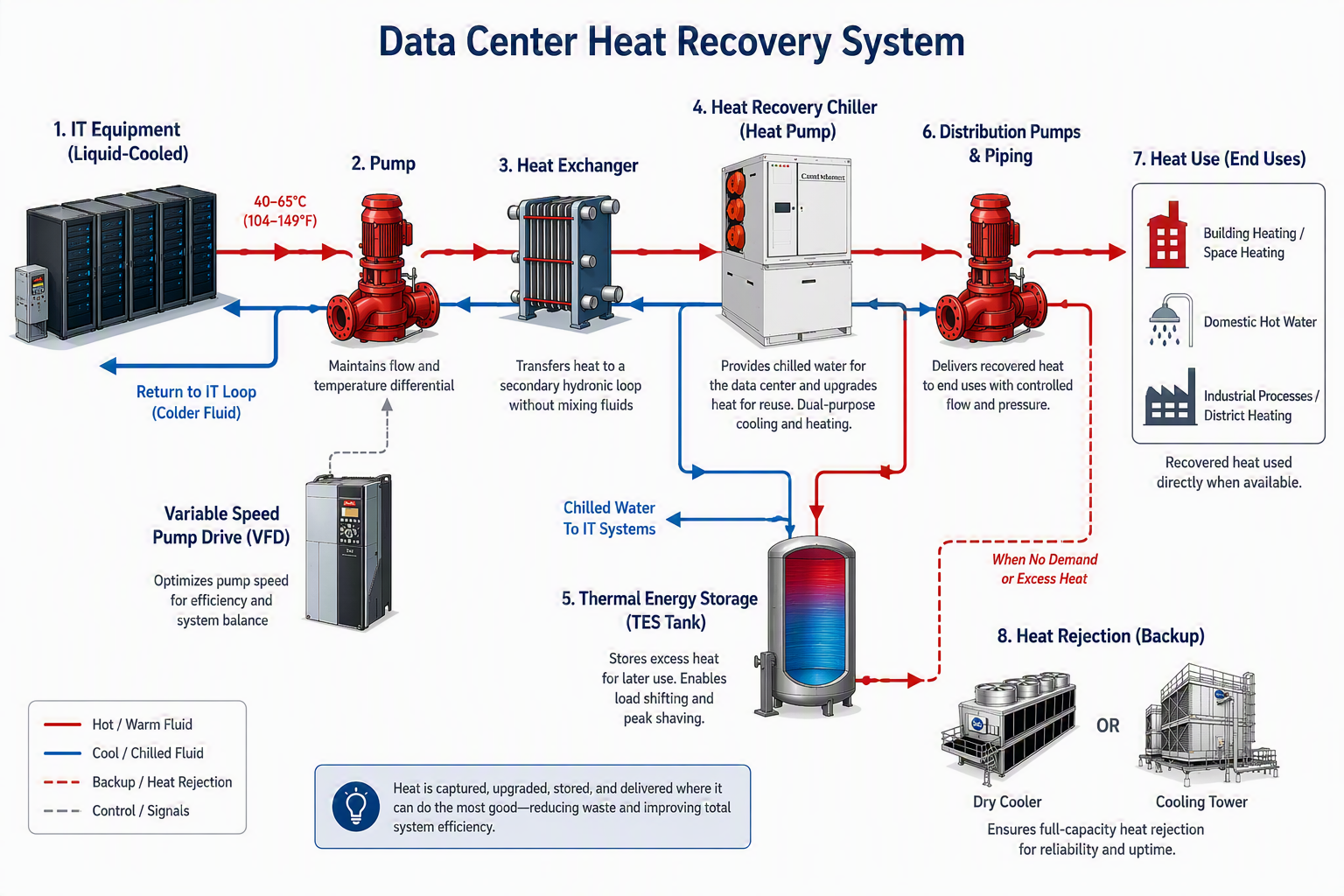


For decades, data center cooling has been designed around one core assumption: heat is a problem to remove. Servers generate it, cooling systems collect it, and mechanical equipment rejects it to the atmosphere. That approach is essential for protecting uptime, but….
We’ve talked about ways to reduce data center water consumption through non-evaporative and hybrid heat rejection. Even so, it is unlikely that data centers will abandon evaporative cooling altogether. It is too effective—and often too economical….
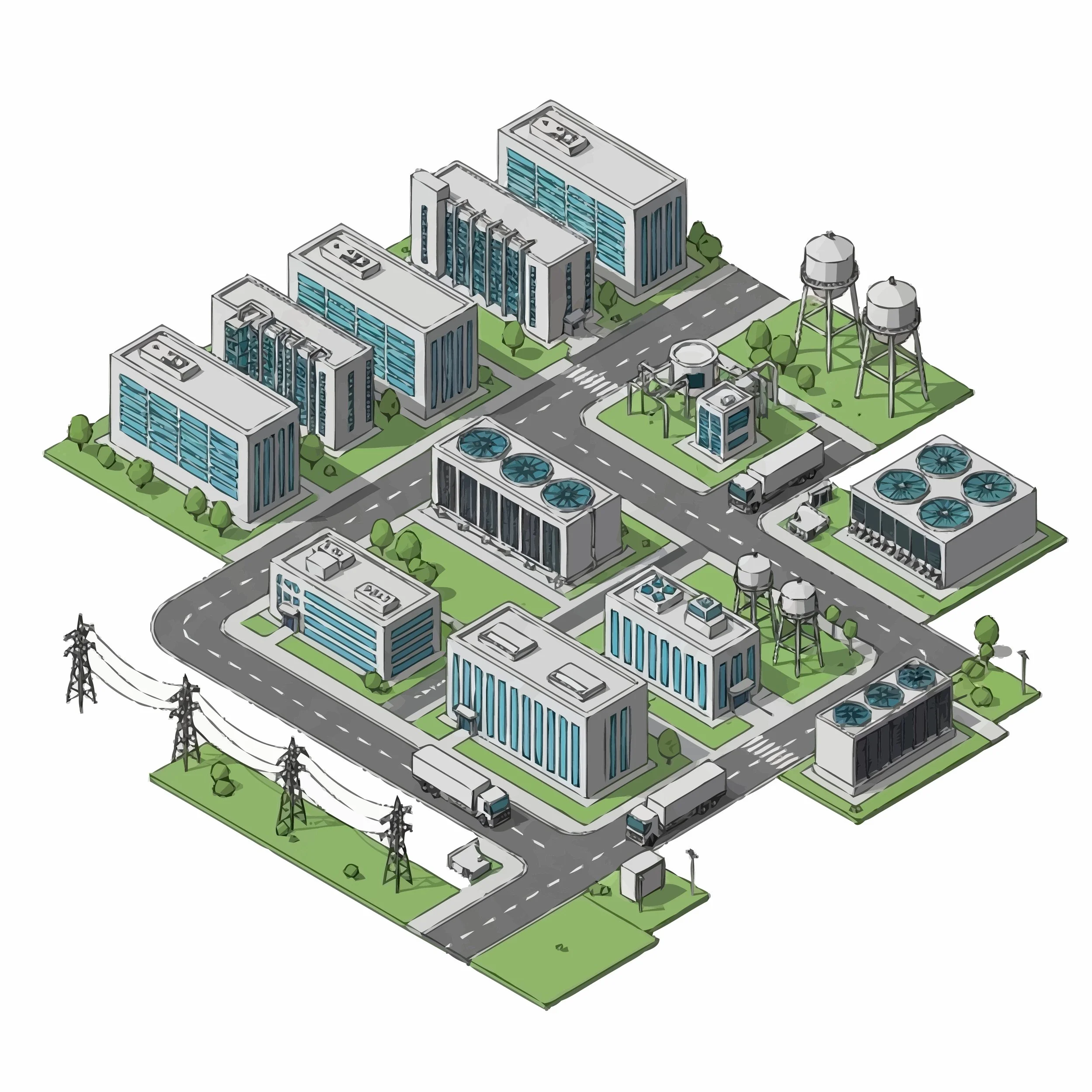
While many existing data centers use open cooling towers for heat rejection, most newly built centers are opting for less water-intensive strategies. Closed-loop systems (including heat rejection) are becoming increasingly common, especially in….
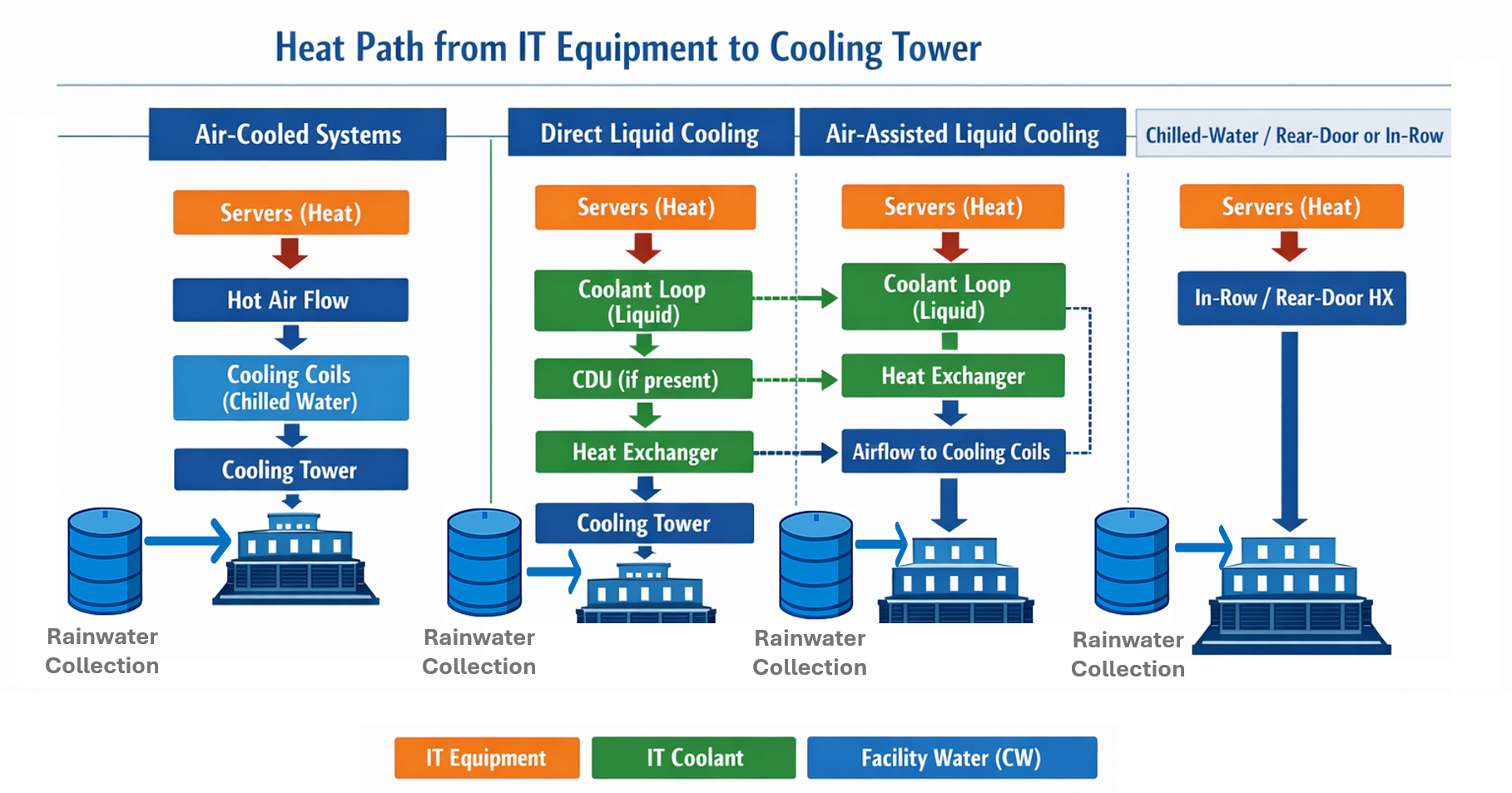
Heat rejection is the most consequential aspect of data center cooling design. Data centers are driven to optimize heat rejection to minimize, or even eliminate, their reliance on chillers. There is a wide range of both traditional and evolving solutions which we will explore as this series progresses. In this blog, we focus on heat-rejection via….
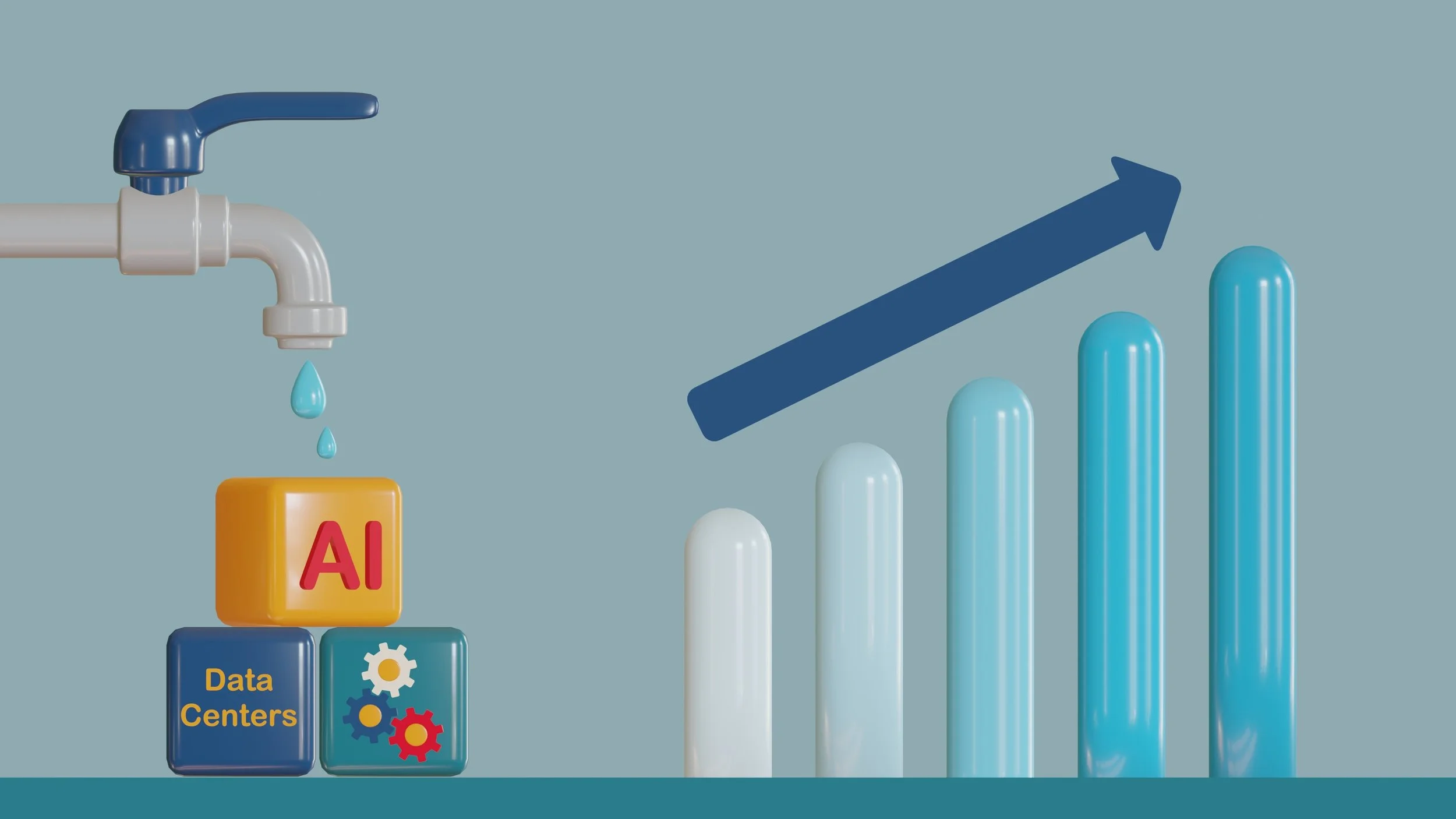
Keeping servers cool is one of the biggest challenges data centers face due to the rapid growth of AI and its energy-intensive graphics processing units (GPUs). These high-density workloads generate massive heat, which must be….
Visit our Contact Page and let us know what information you'd like to receive.
Powered by Squarespace
Air can transport heat, but liquid transfers it with far greater density, stability, and control. That difference is why immersion cooling changes the thermal….