Fire Pumps for Sprinkler Systems Part 1: How to Size a Fire Pump
/
By Wade Laughon
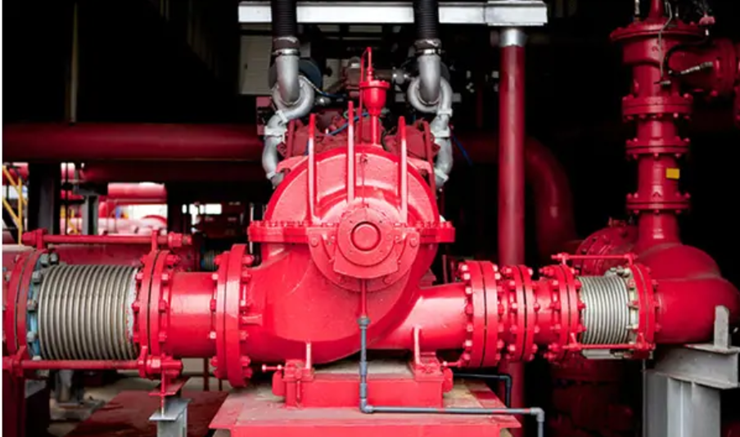
When municipal or onsite water resources can’t provide enough pressure for building fire protection systems to operate effectively, stationary fire pumps are required to boost water pressure, especially in multi-story buildings. In this blog series, we will explore the design, installation, and maintenance of fire pumps. NFPA 20 is the Standard for the Installation of Stationary Pumps for Fire Protection. It provides the minimum flow and pressure requirements for fire protection systems. It is an essential reference for pump sizing, the focus of this blog.
NFPA 20 Fire Pump Sizing Requirements
Fire pumps typically supply a building's standpipe system, usually located in stairwell spaces. These pipes transport water vertically from floor to floor to the sprinkler system piping. Alternatively, or in addition, the standpipes may also be equipped with hose connections for firefighters. Fire pumps must be sized to meet the demand of the standpipe system, sprinkler system, and/or any other special hazards that may apply.
NFPA 20 allows fire pumps with flow rates ranging from 15 GPM to 5000 GPM, depending on system requirements (Table 1). Fire pumps that serve standpipe systems must be able to provide a minimum of 500 GPM at 100 psi to the top of the most remote standpipe. An additional 250 GPM shall be added for each additional standpipe. (Fire pumps with ratings above 5000 gpm must be reviewed by either the authority having jurisdiction or a listing laboratory.)
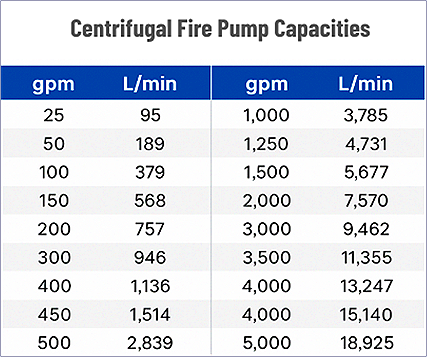
Table 1
In addition,
A fire pump must be able to deliver 150% of the rated flow at a pressure of no less than 65% of the rated pressure.
Have a shut-off pressure (zero flow) that does not exceed 140% of the rated pressure.
Have a certified shop test pump curve ensures it meets system demand.
While system head calculations are beyond the scope of this blog, the engineer or fire protection specialist selecting the pump must account for all pressure loss between the pump outlet and the most remote delivery point. These calculations include frictional losses through pipes, fittings, backflow preventer, and the sprinkler heads. The local jurisdiction may also require that a safety factor be added to the total system pressure loss. Whatever pressure is available at the pump suction (e.g., pressure from a city water connection) can be subtracted from the required pump head.
Figure 1 visualizes the minimum and maximum performance ranges of a properly selected pump.
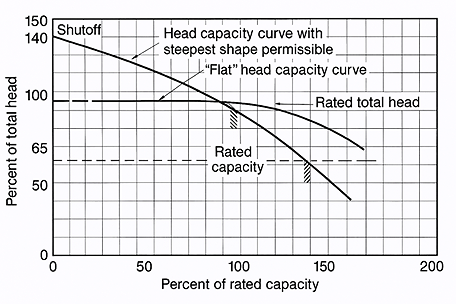
Figure 1
In our next blog, we will cover the different types of fire pumps and when and where to use them.
Wade Laughon has 39 years of experience in fire pump sales and application. He started the fire pump division at JMP when he came to work for the company in 1989.