Wastewater Heat Recovery Series Part 3: Evaluating Project Feasibility
/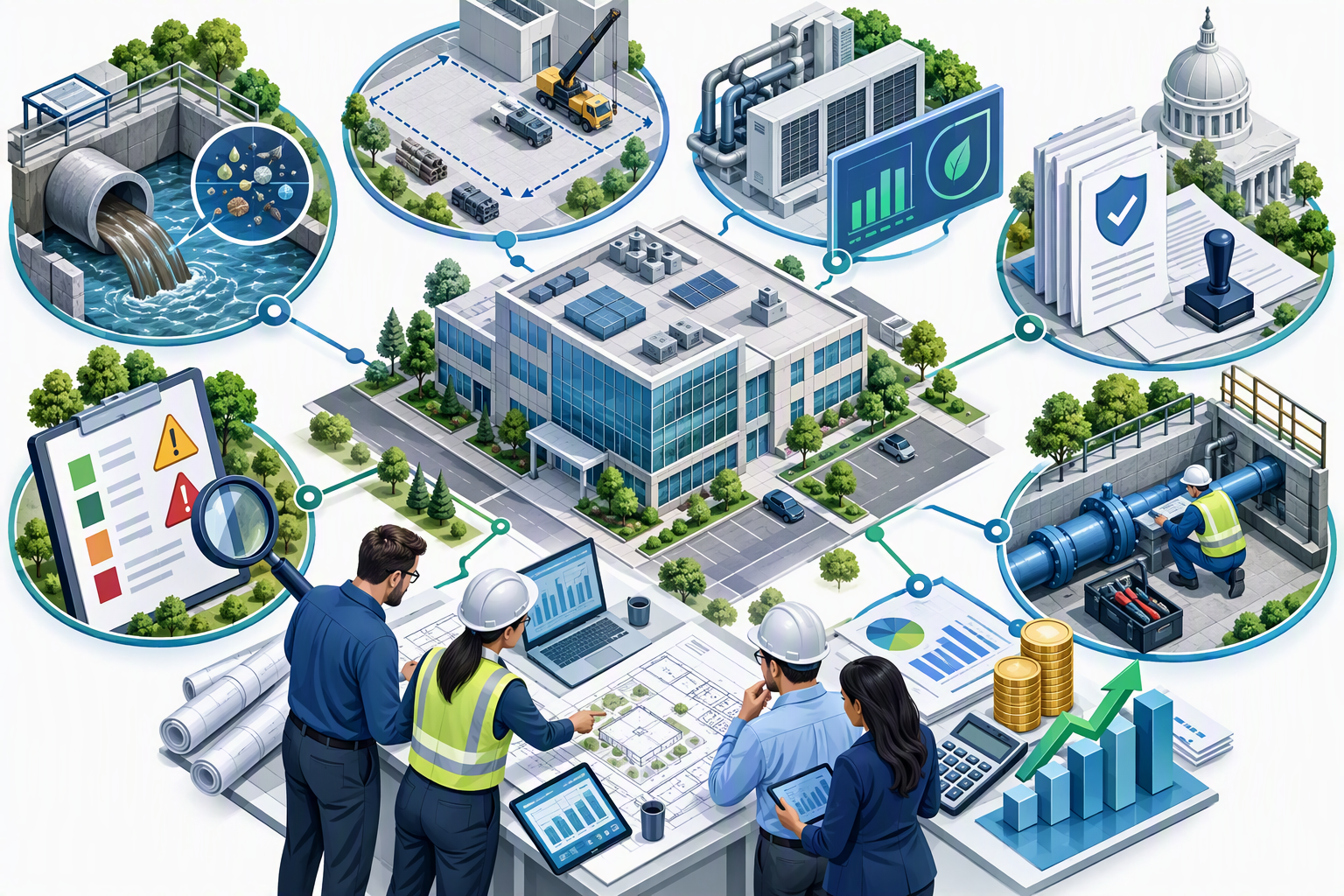
A promising wastewater heat recovery opportunity begins with a compatible source and a nearby demand for thermal energy. Early screening can establish that potential, but it does not tell the whole story. The project must also fit the site, operate efficiently, clear the necessary approvals, and deliver value over its operating life.
These factors usually become more important as a project moves from early screening into concept development and feasibility analysis. Looking at them early can help teams avoid surprises and focus engineering effort where it is most likely to pay off.
Start With the Wastewater Itself
Wastewater is not a uniform heat source. Its composition can vary widely by facility and over time, affecting fouling, corrosion, clogging, heat transfer, and maintenance. The key is to understand what the stream carries and how its conditions may change.
Domestic wastewater often carries everyday debris such as hair, lint, food particles, and grease. Industrial streams can be more variable, with process-related chemicals, suspended material, or shifting temperatures. Even treated effluent changes with treatment methods and seasonal conditions.
Start by identifying the type of stream you’re working with. Determine whether it is raw or screened wastewater, process water, or treated effluent, then have a wastewater specialist evaluate its composition and variability. That picture will guide pretreatment and cleaning needs while helping the team choose materials that are compatible with the stream.
The goal is not to find perfectly clean wastewater. It is to understand the stream well enough to select equipment and a maintenance strategy that can handle it.
Make Sure the System Fits the Site
A technically sound concept can still stumble if the site cannot accommodate the full system. Heat recovery equipment needs enough room not only for installation, but also for safe access throughout its operating life.
Teams should confirm that equipment can be delivered and installed without disrupting critical operations and that it can later be serviced, cleaned, and replaced when needed. Sewer-adjacent or underground installations introduce additional concerns, including worker safety, drainage, flooding, odors, and traffic access.
In other words, fitting the equipment is only part of the challenge. The design also needs workable clearances and piping routes, safe service access, and a construction approach that limits disruption to the people and processes around it.
Account for the Energy Needed to Recover the Heat
Recovered heat is useful only if the system does not consume too much energy to capture, move, and upgrade it. The heat pump and circulation equipment usually account for much of that demand, but screening, controls, ventilation, freeze protection, and cleaning also consume energy.
The required temperature lift is especially important. Heat pumps tend to perform best when the source temperature is stable and the delivery temperature is moderate. Efficiency can fall with colder wastewater, higher supply temperatures, or frequent part-load operation. System resistance matters too: long piping runs and fouled heat-transfer surfaces increase pumping energy.
The full energy balance should reflect real operating conditions. An engineer should use an hourly energy simulation tool that represents the entire heat recovery system—not just the heat pump. The model should account for changes in wastewater flow and temperature, heat exchanger performance and fouling, heat pump efficiency across expected loads and temperatures, pumping energy and pressure losses, and the building or process load profile.
Understand the Approval Path Early
Wastewater heat recovery crosses several disciplines and may involve both facility systems and public infrastructure. The approval path depends largely on where energy is captured, who owns that location, and how the recovery system connects to the source and load.
Review may extend beyond building, plumbing, and mechanical officials to the sewer utility, treatment authority, environmental or public health agencies, and the owner’s internal teams. Projects near municipal sewers or public rights-of-way may also need separate access agreements or utility coordination.
Early in the process, clarify ownership of both the wastewater source and the equipment location. From there, map the codes, access restrictions, permits, agreements, and ongoing compliance duties that apply. This helps the team understand not only what is required to build the system, but also what must be monitored or reported after startup.
Early conversations with the right authorities can expose requirements while the design is still flexible. Waiting until permit review can lead to redesign, schedule delays, or unexpected costs.
Screening to Feasibility
First cost matters, but wastewater heat recovery systems should be evaluated over their full operating life. A low-cost concept that fouls often, consumes excessive pumping energy, or requires difficult maintenance may deliver less value than a more robust design.
A lifecycle analysis should capture the full path from design and permitting through construction, commissioning, operation, and eventual replacement. Capital cost is only the beginning. The model should also reflect purchased energy, routine service, cleaning, component replacement, downtime, and operator involvement. Incentives or avoided infrastructure costs can improve the business case, but they should be weighed against those ongoing demands.
Simple payback can be useful for an early screen, but net present value, internal rate of return, and total cost of ownership provide a fuller picture. The analysis should test several scenarios, so the decision does not depend on a single set of assumptions about energy prices, maintenance, performance, incentives, or project life.
From Good Opportunity to Buildable Project
Wastewater heat recovery starts with the right source and load, but a successful project must also be maintainable, efficient, capable of clearing the required approvals, and financially sound. Evaluating those practical realities early turns a promising idea into a more credible project plan.
That evaluation works best when designers, wastewater specialists, facility operators, controls professionals, permitting authorities, and financial decision-makers collaborate early. Bringing those perspectives together helps the team identify risk sooner and make a stronger case for—or against—moving forward.