Fire Pumps for Sprinkler Systems Part 3: Motor and Drive Selection
/
By Wade Laughon
Fire pumps used for standpipe, sprinkler systems, and hydrants may be driven by electric motors or diesel engines, depending on the application and relevant NFPA 20 requirements. Both drivers are available for split-case and vertical turbine fire pumps. Vertical inline fire pumps are limited to electric motor drivers only.
Electric Motor-Driven Pumps
Electric motors are typically chosen for indoor fire pump installations if the facility has stable power. They are easy to maintain and reliable. NFPA 20 requires electric fire pumps to have a “continually available source.” This rules out electric pumps if the power source:
Has experienced shutdowns lasting more than 10consecutive hours in the past year.
Has had frequent unscheduled outages.
Is served by overhead cables outside the building.
Direct and Indirect Diesel-Driven Pumps
Diesel fire pump drivers are required when the facility lacks continuous, reliable electricity or a reliable standby generator. Unlike gasoline engines, which mix fuel and air before compression, diesel engines compress only air. Diesel drivers, also known as compression drivers, are the only permissible internal combustion drivers for fire pumps. Spark-ignition engines running on natural gas, propane, or gasoline are not allowed due to safety concerns.
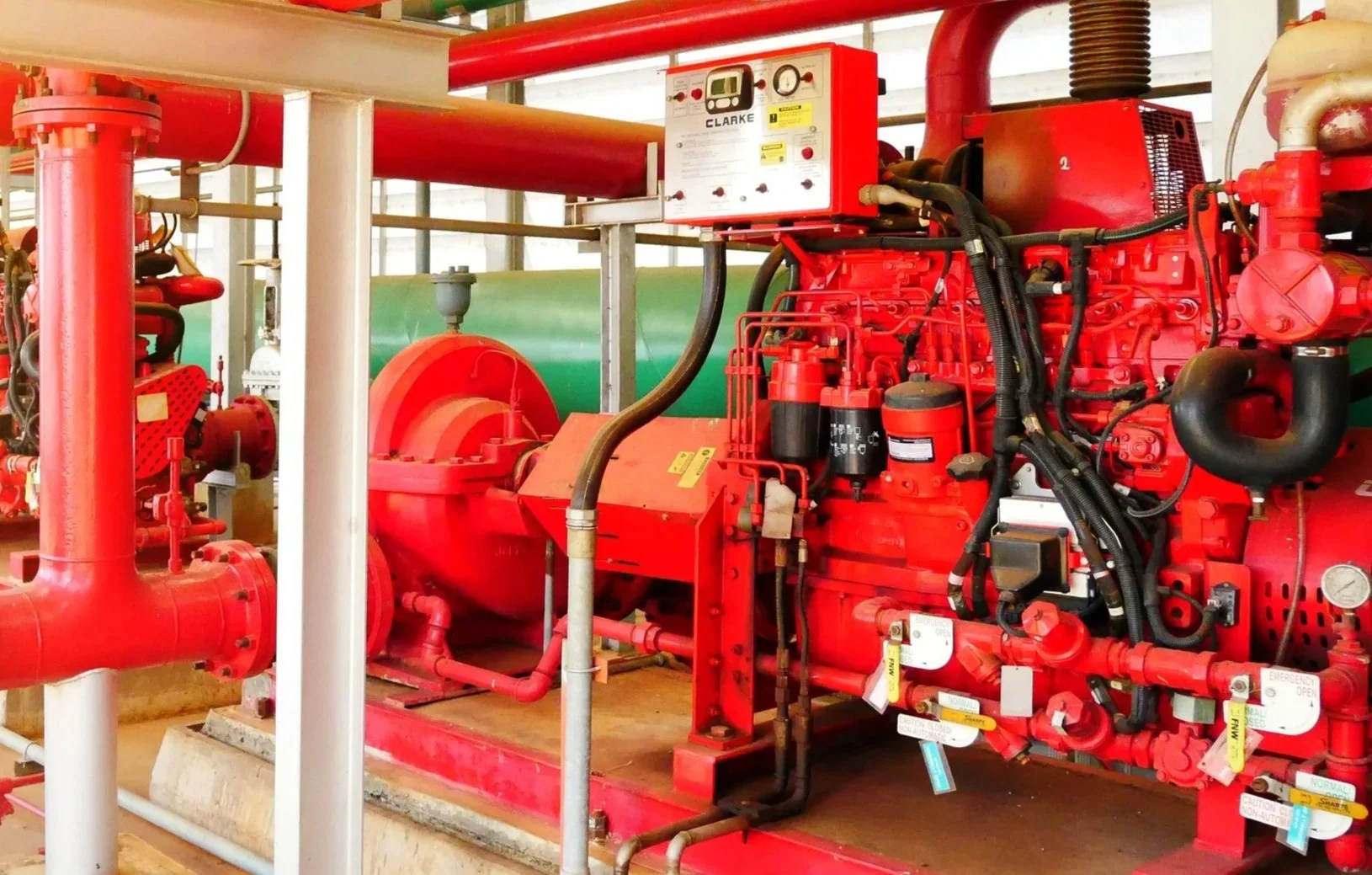
Diesel engines can be connected to and used to power the fire pumps, either directly or indirectly. Direct-drive diesel engines are mechanically coupled to a pump through a specifically designed flexible coupling or flexible connecting shaft. Optionally, owners can install an electric pump and power it indirectly with an on-site diesel generator. Diesel generators are frequently installed at remote locations to provide power to the facility during outages. They are also required as back-up for fire suppression in high-risk or high-rise buildings unless there is a second, independent utility source.
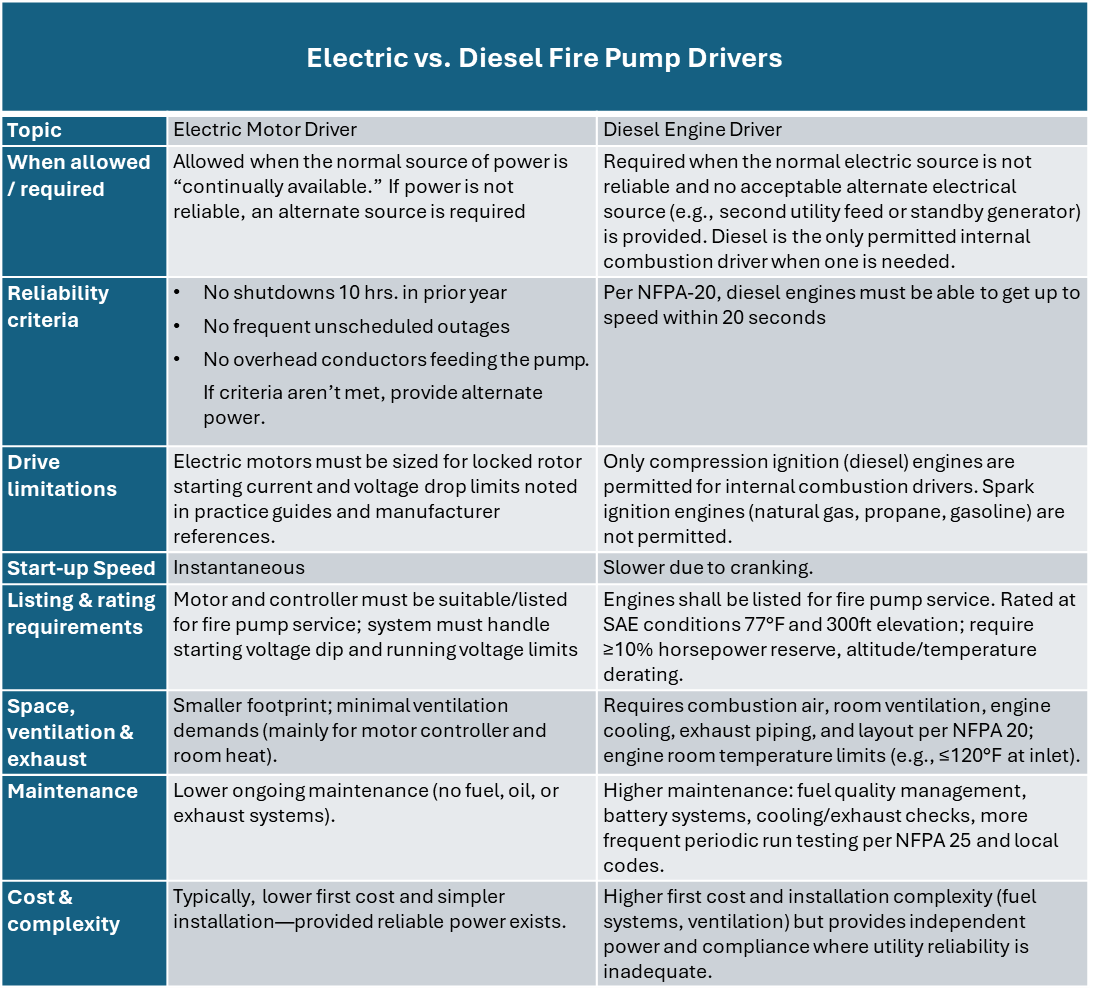
See the table below for a comparison of electric-motor-driven engines versus diesel-engine-driven pumps for stationary fire pumps.
Natural Gas-Fired Generators
Natural gas-fired generators are a less common alternative to indirectly driving electric fire pump motors, when specifically approved by the Authority having Jurisdiction.
There are some advantages to natural gas over diesel for driving electric fire pumps, most notably that natural gas, if available, typically comes from a highly reliable municipal source. Natural gas also doesn’t require onsite storage or maintenance.
Ambient Temperature and Elevation Impact Horsepower Requirement
No matter what type of driver you choose for your fire suppression system, the NFPA requires that it be able to operate at the rated speed and pump load under all flow conditions. The engine nameplate must list the horsepower needed for flows up to 150% of rated capacity. However, these values must be adjusted based on the ambient air temperature and altitude of the space/location where the engine is installed.
The engine horsepower must be derated by 1% for every 10 degrees (F) increase in the ambient air temperature over 77°F.
The horsepower must also be derated by 3% for every 1,000 ft increase in elevation above 300 ft.
Avoid Oversizing the Pump and Driver
Avoid the temptation oversize the pump or driver; do not rely on the pressure relief valve to relieve excess pressure. Doing so creates unnecessary cost for the owner and ongoing inefficiencies within the system.